Phew. Busy week.
The upcoming patch will feature a bunch of changes, we thought it best to summarize them in a blog post.
I.C.E.
This is the big one. The Integration Cycle Extender is an ingame, tradeable, consumable item that grants 30 days of game time to the account that it's consumed on. Players will be able to purchase ICE items from the Perpetuum website and sell them in-game to other players. This essentially gives players the option to play Perpetuum for free by acquiring game-time from others in the game.
Relating to this is a minor convenience change in the store we're currently still working on: soon you'll be able to automatically redeem your codes instead of getting them in email and having to fish them out from the spam-folder.
Character creation
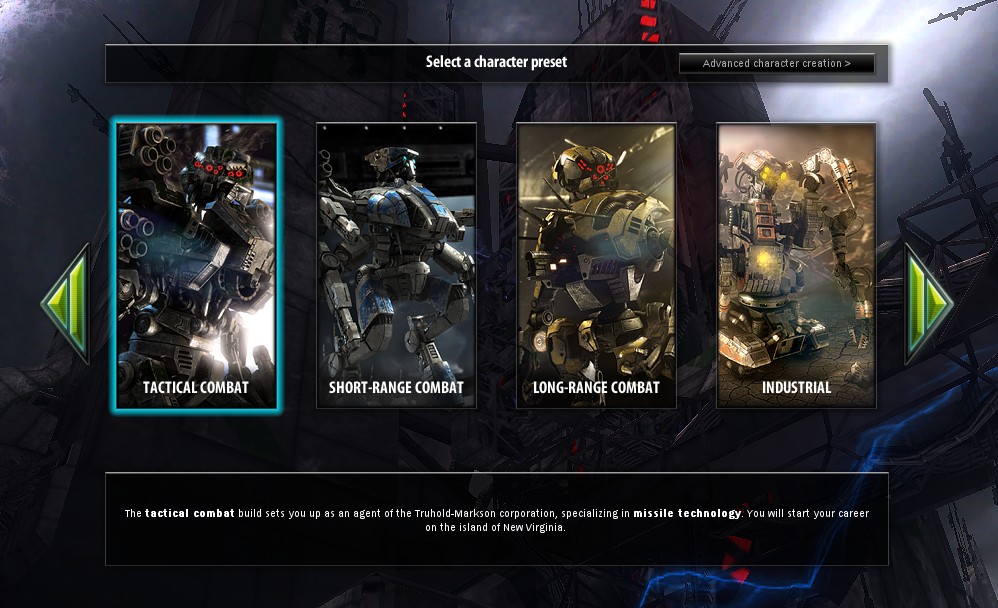
With the influx of new people from Steam Greenlight we decided to spend some time polishing some aspects of Perpetuum that are first experienced by players. The most apparent of these changes is the way we're changing character creation.
We want to avoid new players getting swamped with all the intricacies of the current system - we did some research into the most common character types, and created a character template selection screen for quick access to these. The old version of the character creator is moving to the "advanced" menu on this screen.
Amazon Kickstarter
Some of you know about the Amazon exclusive kickstarter campaign we're currently doing. The point was raised that the EP bonus granted by the kickstarter being only available to new accounts is unfair (not to mention the lack of an announcement and the fact that this Amazon offer is US only), so we're changing things around a bit concerning this to fix the level playingfield.
The 20,000 EP that's currently granted by the Kickstarter will from now on be granted to all accounts upon first subscription, regardless where the time-code came from.
All accounts that haven't participated in the Kickstarter will retroactively get this 20,000 EP during the patch as well. Just to be perfectly clear, this means that no EP will be removed from any account, and all those who have a non-trial account and haven't redeemed a kickstarter code will get 20,000 EP. The exclusive items granted by the Kickstarter are not affected by this.
Smaller changes
We're adding detailed notifications to the equip window to let players know if they don't have the required extensions for an item they have equipped.
All NPCs on Alpha 1 islands will all change to non aggressive by default. This is to make sure new players don't get overwhelmed at once or during the tutorial. Affected missions will change accordingly.
Steam Greenlight
As we wrote in the last blog post, Valve has introduced the Greenlight feature to Steam about two weeks ago. This Tuesday the first 10 games have been greenlit with more coming "soon". This is very good news, as Perpetuum has been in the top 15 for more than a week now.
We'd like to offer congratulations to the dev teams of the first 10 games to get in, and thank everyone who voted for us.
We're giving away a one year game code on our Greenlight page upon every 5% we reach, and will be giving away the remaining in a single burst if we get greenlit. So go and vote if you haven't already!